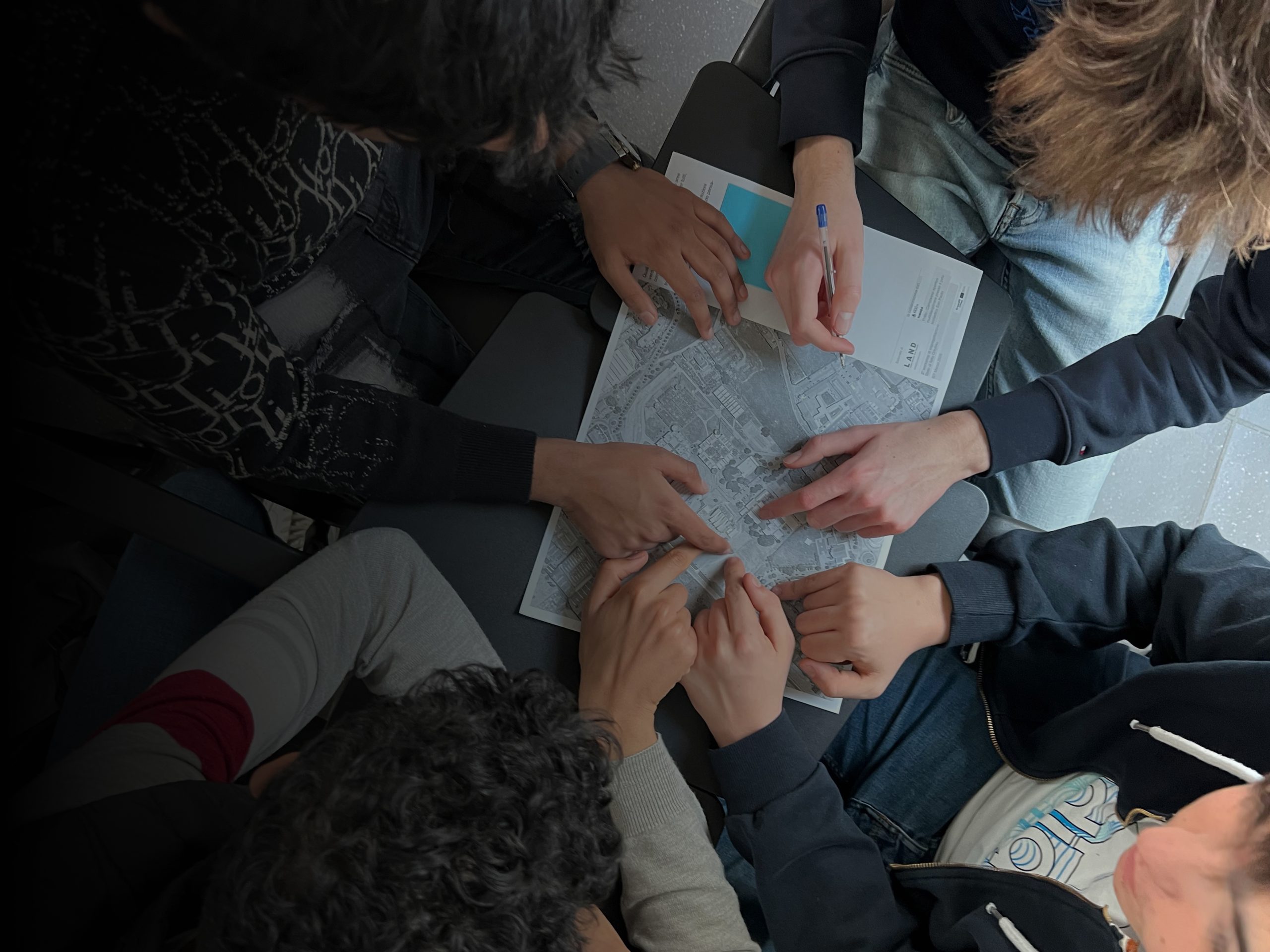
Urban transformation should never be a top-down process promoted by city planners and policymakers. Co-Creation methodologies are reshaping how cities evolve, ensuring that local communities play an active role in designing and implementing sustainable urban solutions that reshape their daily environments. The GreenInCities project, funded by the EU under the EU Missions for Climate -Neutral and Smart Cities and Adaptation to Climate Change, exemplifies this shift through its structured Co-Creation approach, which integrates diverse stakeholders to foster meaningful collaboration.
The City of Prato, located in Tuscany, Italy, is one of the project’s Leader cities. Specifically, Prato’s pilot, located in the San Paolo School Complex is currently undergoing a Co-Creation process aiming to bridge gaps between groups that have collaborated on rare occasions. By prioritising inclusivity, transparency, and shared decision-making, the project is strengthening social cohesion while addressing environmental challenges, fostering a sense of community and delivering long-term urban benefits.
The Core Principles of Co-Creation
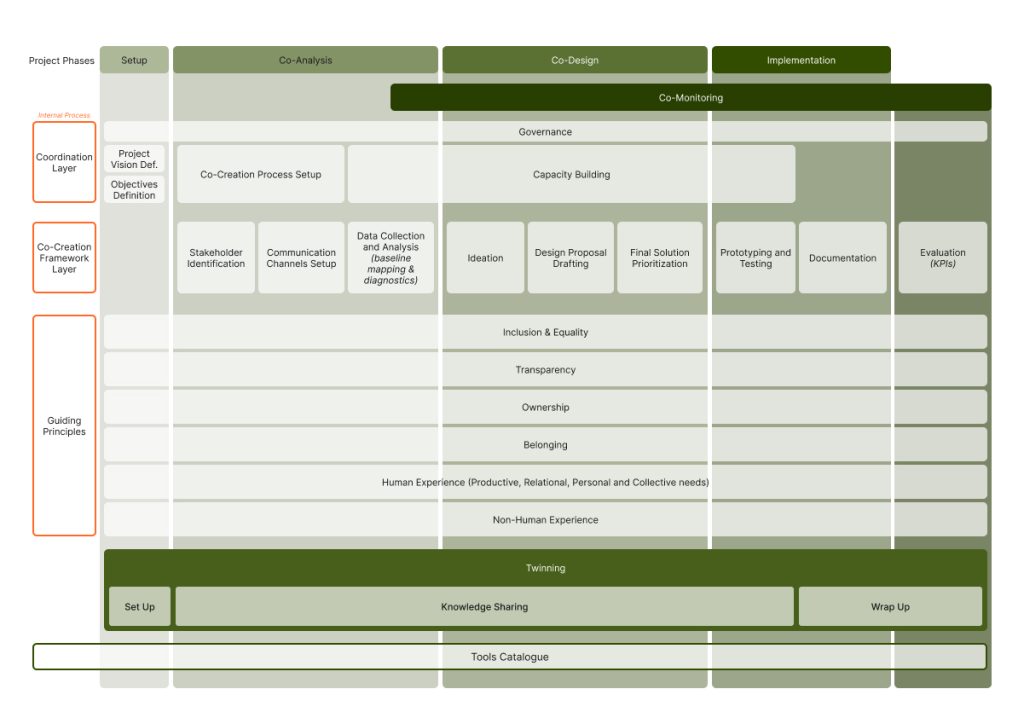
The Co-Creation methodology created for GreenInCities is more than just a set of participatory activities; it is a structured approach designed to guide the participatory process of the 11 cities (5 Leader cities and 6 follower cities) participating in the project through a collaborative, iterative process. It consists of several key phases: Co-Analysis, Co-Design, Implementation, Co-Monitoring and Twinning, ensuring that stakeholders remain actively engaged at every step through a series of layers suggesting actions, activities, principles and the available tools provided by the consortium partners.
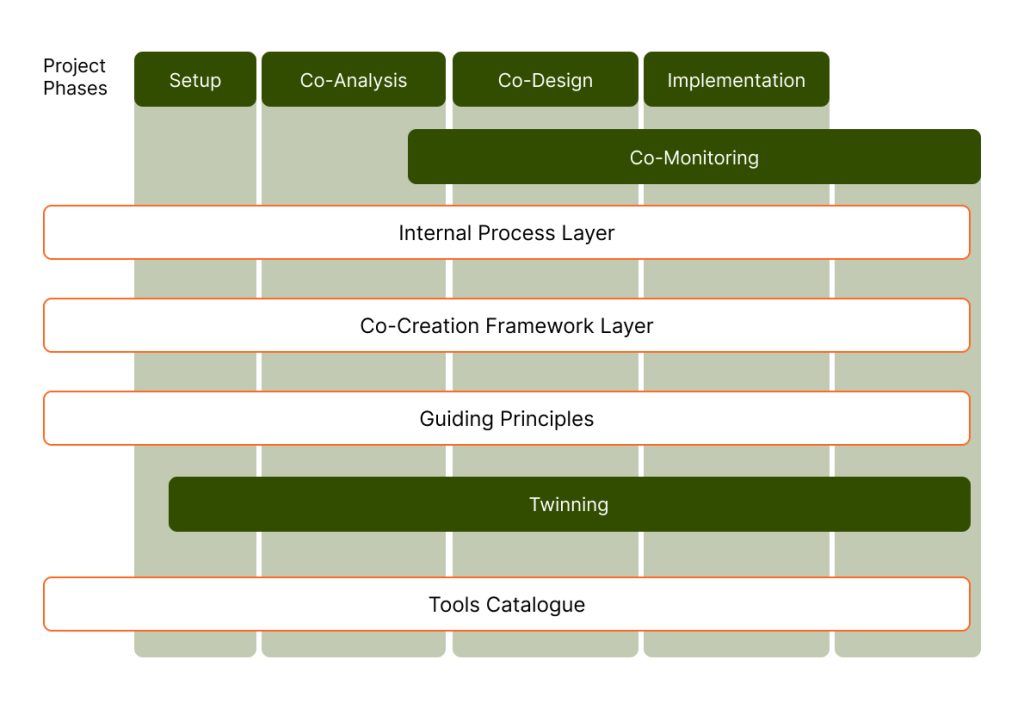
To support this methodology, THINGS, as task leaders, encourage these six guiding principles, try to ensure that Co-Creation is not just a process but a value-driven approach that leads to inclusive, sustainable, and impactful urban solutions.
1. Inclusion & Equality

Co-Creation must be accessible to all, including vulnerable and underrepresented groups. By prioritising social inclusion, the methodology ensures that every voice is equally heard and integrated into decision-making. This directly addresses one of GreenInCities’ core challenges: improving societal readiness and awareness of vulnerable communities.
2. Transparency

Trust is fundamental in participation. Transparent procedures ensure that all decisions, actions, and outcomes are communicated clearly, allowing stakeholders to understand, intervene and influence all the processes of the urban interventions.
3. Ownership

Co-Creation is not about consulting citizens, it’s about empowering them to take ownership of solutions. By actively involving stakeholders in all phases, the process fosters a sense of responsibility and long-term commitment to urban projects.
4. Belonging
A successful urban intervention is one that enhances community connections. The Co-Creation process nurtures a sense of belonging by fostering collaborative relationships and shared urban spaces, ensuring that solutions reflect the community’s identity and values.
5. Human Experience

Urban transformation should prioritise people’s everyday needs. The methodology considers the four spheres of life: productive (work), relational (caregiving), personal (well-being), and collective (community participation), to design interventions that genuinely enhance daily urban life.
6. Non-Human Experience

Sustainable cities must consider more than just the human needs. This principle integrates Nature-based Solutions, emphasising the role of biodiversity, ecosystem health, and climate adaptation in urban design. By treating nature as a stakeholder, including plants and animals, the project ensures long-term environmental resilience.
How Co-creation is Transforming Prato’s Pilot
Prato hosts one of the most prominent Chinese communities in Europe 1, yet it remains relatively isolated from broader civic engagement, as highlighted through conversations and information provided by the municipality, from their past experiences in other urban improvement projects, and academic research. Latham and Wu (2013) note that in areas where Chinese immigration has been rapid and large in scale, such as Prato, tensions have emerged due to perceived economic and labour law challenges, contributing to social fragmentation. This limited interaction between the Chinese community and the local population has resulted in a segmented social landscape, making Co-Creation initiatives even more crucial in fostering dialogue, inclusion, and mutual understanding. Additionally, within the pilot site, communication between stakeholders like schools, institutes, sports associations and others has been minimal, limiting collaboration and preventing potential projects from gaining momentum.
To address these challenges, Co-Creation has been instrumental. Early stakeholder mapping has helped identify as many voices as possible, including those historically not directly involved in urban planning, and efforts are ongoing to ensure broader inclusion. The Co-Analysis and Co-Design workshops organised have engaged students and institutional stakeholders, bringing fresh perspectives on the site’s challenges and opportunities. During the Co-Analysis phase, workshops with previously unengaged adult stakeholders fostered dialogue across different groups, focusing on key topics such as Vitality, Accessibility (physical), Psychophysical well-being, and Safety. In the Co-Design phase, the workshop shifted focus to exploring potential solutions for implementation, including new ideas inspired by the ones present in the GreenInCities catalogue. As part of the efforts to broaden the involvement of different citizens, the Prato Living Lab 2 is preparing a questionnaire that could be distributed to nearby communities, gathering diverse perspectives to further inform the project.
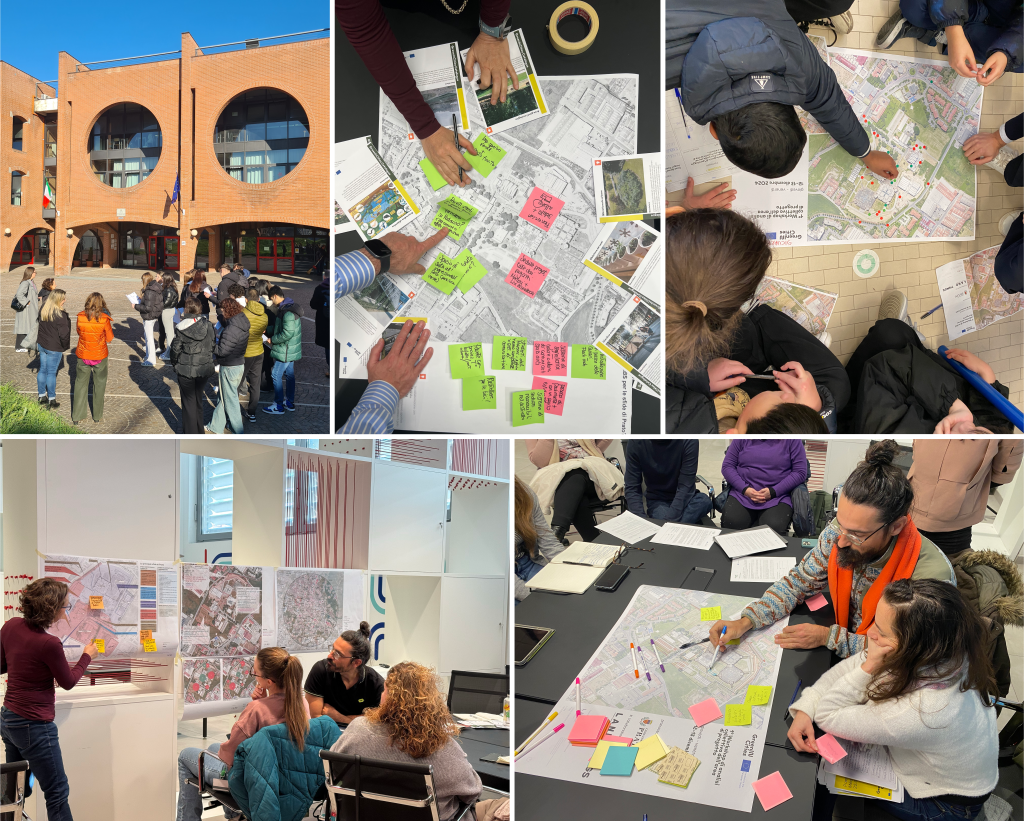
These efforts are strengthening connections, improving communication, and fostering a sense of shared ownership. Stakeholder involvement ensures that diverse perspectives are considered, making the process more inclusive and reflective of the community’s needs and desires. Through collaboration and active engagement, participants are helping shape a more connected and sustainable future for Prato.
1 Pratoconta. Tabella 6.1 – Popolazione straniera residente nella provincia di Prato dal 1996 al 2023
2 Living Labs are collaborative spaces where citizens, institutions, researchers, and businesses co-create and test solutions in real-world settings (D3.3 GreenInCities LLs Governance initial report). Prato’s LL includes at its core the municipality (Comune di Prato), and technical partners (THINGS & LAND). At an extended level it includes local schools, research institutions, and community groups, working together to improve the pilot site.
Tangible Benefits for the Community
The Co-Creation methodology plays a crucial role in improving social cohesion and building trust among stakeholders who previously had little interaction. Having conversations about the topic has helped stakeholders feel more involved and has facilitated the sharing of potential ideas, projects, and initiatives. By involving diverse groups, students, local organisations, and scholastic institutions, collaboration has increased, fostering a stronger sense of shared responsibility for the area.
One notable outcome has been the rise in active participation. Once disengaged stakeholders are now contributing ideas and working together on potential solutions and project initiatives. Stronger local networks are emerging, breaking down barriers between different groups and laying the foundation for future projects. The methodology has also provided participants with a sense of purpose, with some students even expressing “feeling like researchers”, actively analysing and shaping their possible solutions.
Even though this is an ongoing process, these efforts are already creating a more connected and engaged community, proving that inclusive urban development is not just possible but transformative.
References:
Frosini L.R., Melani A., Lorenzo I., Privitera O., De Zolt M., (2025). La comunità cinese in Toscana tra crescita economica e invisibilizzazione culturale.